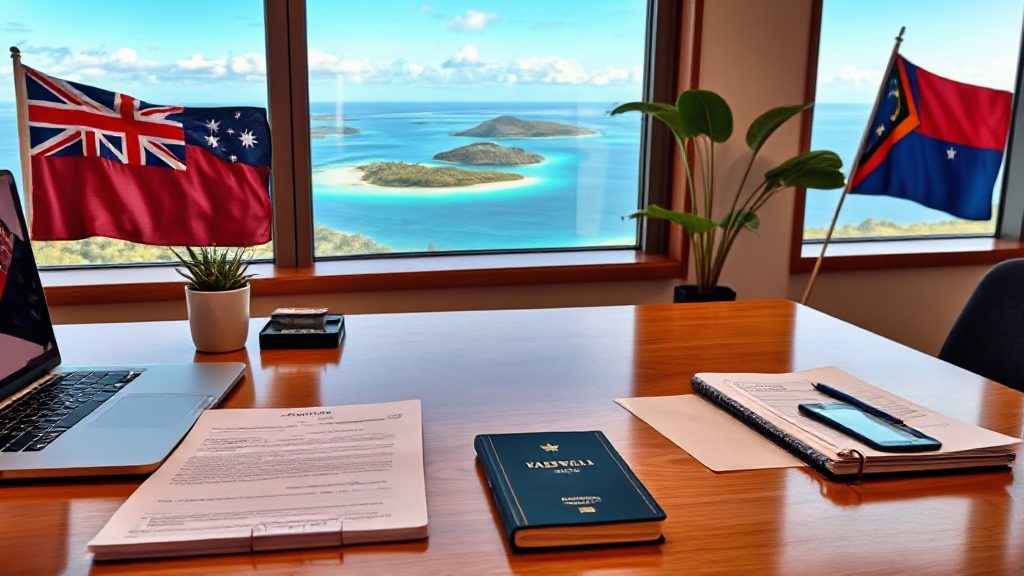
What Does a Day With vanuatucitizenship.au Actually Look Like?
The thing most guides leave out is the waiting. Not the paperwork, not the fees, not the eligibility questions — the strange, suspended feeling of having handed over documents and then simply carrying on with your Tuesday while a decision is made somewhere in the South Pacific. I used vanuatucitizenship.au earlier this year, and what follows is an honest account of what a working day with that site and its advisory process actually feels like, written the way I would explain it to a friend over coffee.
Why I Started Looking at Vanuatu Citizenship in the First Place
I am an Australian citizen, I travel for work, and I had been half-reading about citizenship by investment programmes for about two years without doing anything about it. The trigger was mundane: a visa delay on a business trip that cost me a contract. I wanted a second passport as an insurance policy, not as a dramatic lifestyle change.
Vanuatu appealed because of proximity and because Australia recognises dual citizenship, so I would not be giving anything up. The country sits roughly three hours from Australia by air, which matters more than it sounds when you are thinking about where your documents and your future travel plans live.
What I did not want was a sales call. I wanted to understand the requirements, the costs, the timeline and who was actually authorised to submit an application. That is the gap vanuatucitizenship.au fills: it is an advisory information resource for Australian applicants, not a government department and not an immigration authority.
My Morning: Reading Before Contacting Anyone
I blocked out a Saturday morning, made coffee, and worked through the site section by section rather than skimming. The first thing I noticed was that the material is organised around the questions Australians actually ask, rather than around marketing language.
What I Read First
I started with the requirements and cost information, because those two things decide whether a programme is realistic at all. Then I moved to the application process and timeline, and finally to the authorised agent information, which turned out to be the most important section for me.
- Eligibility basics and the documents typically requested
- Cost structure and what the figures do and do not include
- Process stages from initial enquiry to decision
- Realistic timelines, including the boring administrative parts
- How authorised agents fit into the chain
Reading in that order saved me from the classic mistake of falling in love with the outcome before checking whether I qualified or could fund it.
The Detail That Changed My Mind About Advisors
I had assumed I could assemble the application myself with enough Googling. The site made clear that submissions run through authorised agents, and that the quality of the agent affects how smoothly the file moves. Using an authorised agent is not a formality — it is the mechanism by which the application actually travels.
By lunchtime I had a shortlist of questions and a much clearer sense of the trade-offs. That is the real value of a research session: not answers, but better questions.
My Afternoon: The Enquiry and the First Conversation
I sent an enquiry in the early afternoon and expected silence until Monday. Instead I had a reply the same day, which set the tone for the rest of the process.
What the First Call Covered
The conversation was structured and slightly dry, in the way that good professional conversations are. We went through my citizenship status, my travel history, the source of funds question, and my timeline. Nobody promised a outcome or a date; instead I was told which stages were within anyone’s control and which were not.
That honesty was refreshing. Anyone who guarantees an approval date is guessing, and I would rather hear a range with caveats than a confident number.
The Paperwork Reality Check
Later that afternoon I started gathering documents. This is the part that separates a fantasy from a plan. Certified copies, police clearances, proof of funds, passport photographs to specification — each item has its own lead time, and several depend on other people’s schedules.
I built a simple tracker: document, who supplies it, expected date, actual date. It sounds fussy. It was the single most useful thing I did all day.
What the Costs and Timeline Really Look Like From the Inside
Costs are the section everyone reads first and understands last. The headline figure is not the whole figure, and the timeline is not a single number either.
| Element | What It Means in Practice |
|---|---|
| Programme contribution | The core amount tied to the application; confirm what it covers |
| Due diligence and processing | Checks on the applicant and dependants; usually non-refundable |
| Professional and agent fees | Varies by provider and by the complexity of your file |
| Document and certification costs | Small individually, noticeable in total |
| Timeline | Driven by document readiness first, processing second |
The timeline lesson I learned is that your own document speed is the biggest variable you control. Every week you spend chasing a certified copy is a week added to the end.
I also learned to ask what happens if a dependant’s paperwork lags behind. The answer shaped how I sequenced my family’s applications.
The Evening: Planning Dual Citizenship as an Australian
After dinner I sat down with a notebook and thought about what a second passport actually changes. Australia permits dual citizenship, so there is no conflict to resolve on the Australian side. The planning question is practical, not legal.
Questions Worth Answering Before You Apply
- Which travel corridors matter most to you, and how does a Vanuatu passport affect them?
- Who in your family needs to be included, and in what order?
- Where will your documents be stored and who can access them?
- What is your realistic budget once professional fees are included?
- What would make you walk away from the process?
That last question is the one most people skip. Having an exit condition keeps you rational when a process stretches longer than expected.
Keeping Records Sane
I created a single folder with subfolders for identity, financial, police and travel documents, plus a one-page summary of dates and reference numbers. When anyone asked me a question later, I could answer in seconds. A tidy file is a faster file.
I also noted that the advisory material on vanuatucitizenship.au is informational — it does not replace legal or tax advice for your own circumstances, and I treated it that way.
What I Would Tell a Friend Before They Start
If you are where I was two years ago, here is the short version of the day I have just described.
Start with requirements and costs, not with dreams of a second passport. Expect the process to be document-led rather than decision-led, and expect the waiting to be the hardest part. Use the authorised agent information to understand who is actually handling your file, and ask direct questions about fees, refunds and timelines.
Treat the whole exercise as a project with stages, owners and dates. The people who struggle are rarely the ones who fail due diligence; they are the ones whose paperwork stalls quietly for months.
And keep your expectations calibrated. A second citizenship is a long-horizon decision, not a quick purchase. The day I spent researching properly was worth more than the weeks I had spent half-reading before it.
Frequently Asked Questions
Is vanuatucitizenship.au an official government website?
No. It is an advisory information resource for Australian applicants covering requirements, costs, process, timeline and authorised agents. It is not a government authority or immigration department.
Can Australian citizens hold Vanuatu citizenship as well?
Yes. Australia permits dual citizenship, so holding a Vanuatu passport does not require renouncing Australian citizenship. You should still confirm your personal circumstances with a qualified adviser.
How long does the process usually take?
Timelines vary, and the largest variable is how quickly you supply complete, correctly certified documents. Ask for a realistic range rather than a guaranteed date.
Do I have to use an authorised agent?
Applications are submitted through authorised agents. Choosing one carefully and asking about fees, communication and document handling is part of doing this properly.